
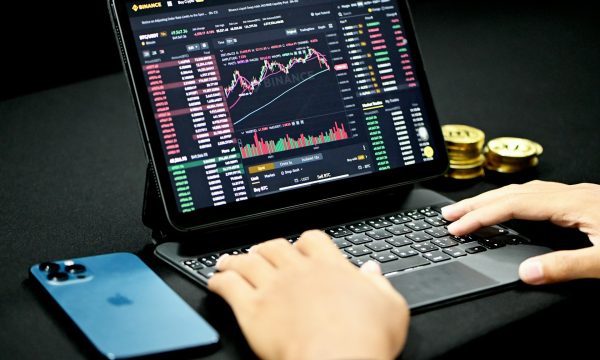


If you want to start trading gold, the first thing to understand is that gold trading is not the same as simply buying physical gold. You can trade gold through physical bullion, gold ETFs, exchange-traded products, futures, options, CFDs, or online spot-gold products such as XAU/USD, depending on your country. Scams are common in gold trading, especially on social media and messaging apps: fake brokers may promise guaranteed profits, “VIP” gold signals, unusually high returns, or ask you to deposit money into a personal bank account or cryptocurrency wallet. A legitimate gold investment or trading strategy can lose money, and nobody can legitimately guarantee a fixed profit from gold prices.
Table Of Content
- 1. Understand what actually moves gold
- 2. Choose what type of gold trading you want
- 3. Decide whether you’re investing or trading
- 4. Learn the basic terminology
- 5. Pick a regulated trading provider
- 6. Understand the difference between a broker and a scam platform
- 7. Start with a demo account
- 8. Learn risk management before learning complicated strategies
- 9. Be extremely careful with leverage
- 10. Learn fundamental analysis
- 11. Learn technical analysis—but don’t treat it as prediction
- 12. Create a simple beginner strategy
- 13. Don’t confuse a winning streak with skill
- 14. Watch out for gold-trading scams in the middle of your journey too
- 15. Understand physical gold versus financial gold
- 16. Consider your local rules
- 17. Start extremely small
- 18. Keep a gold-trading journal
- 19. Never use borrowed money to learn
- 20. A sensible beginner progression
- The most important rules
1. Understand what actually moves gold
Gold is traded internationally and its price is influenced by several major factors:
- US dollar strength — gold is generally quoted in US dollars, so dollar movements can affect its price.
- Interest rates — higher real interest rates can make interest-bearing assets more attractive relative to gold.
- Inflation expectations — investors often use gold as a store of value during periods of monetary uncertainty.
- Central-bank purchases — central banks can significantly influence global gold demand.
- Geopolitical risk — wars, political instability and financial crises can increase demand for safe-haven assets.
- Economic growth — changes in economic expectations can alter investment demand.
- ETF and institutional flows — large investment flows can affect prices.
- Jewellery demand — particularly important in countries such as India and China.
- Mining supply and recycling — these affect longer-term physical supply.
Gold does not automatically rise whenever inflation rises, and it does not automatically fall whenever interest rates increase. Multiple factors can work against each other.
2. Choose what type of gold trading you want
There are several fundamentally different ways to participate.
| Method | What you trade | Leverage | Risk level |
|---|---|---|---|
| Physical gold | Bars/coins | Usually none | Lower, but storage/theft risk |
| Gold ETF | Fund representing gold exposure | Usually low/none | Moderate |
| Gold futures | Gold futures contracts | High | High |
| Gold options | Options on gold | Potentially high | High/very high |
| Spot gold/XAUUSD | Gold versus a currency | Often high | High |
| CFDs | Contract tracking gold price | Often high | High |
| Gold mining stocks | Shares of mining companies | Usually none | Moderate/high |
For a complete beginner, leveraged futures, CFDs and highly leveraged XAU/USD trading are generally poor places to start learning. A small price movement in gold can produce a disproportionately large gain or loss when leverage is involved.
3. Decide whether you’re investing or trading
This distinction is extremely important.
Investing usually means holding gold exposure for months or years because you believe gold has a useful role in a long-term portfolio.
Trading usually means attempting to profit from shorter-term price movements.
For example:
Gold is $3,400 per ounce.
You believe it will rise and buy exposure to gold.
If it rises to $3,450, you may make a profit.
If it falls to $3,350, you lose money.
With leveraged products, however, your actual gain or loss can be much larger relative to the cash you deposited.
4. Learn the basic terminology
Before putting money into a trading account, understand:
Spot price: The current market price for gold.
XAU/USD: A commonly used quotation representing gold priced in US dollars.
Troy ounce: The standard unit used in international precious-metals markets. One troy ounce is approximately 31.1035 grams.
Bid: The price at which you can sell.
Ask: The price at which you can buy.
Spread: The difference between bid and ask.
Margin: Money required to open a leveraged position.
Leverage: Allows you to control a larger position with less capital.
Stop-loss: An instruction intended to limit losses if the market moves against you.
Take-profit: An instruction intended to close a position after a specified favorable movement.
Contract size: The amount of gold represented by a particular futures or derivative contract.
Volatility: How dramatically the price moves over a period.
You should understand these concepts before trading real money.
5. Pick a regulated trading provider
This is one of the most important steps.
Depending on your country, different financial regulators oversee different types of products. Examples of major regulatory jurisdictions include the United States, United Kingdom, European Union, Australia, Japan, Singapore, India, Canada and Switzerland.
Do not choose a broker simply because:
- an influencer recommends it;
- someone in a Telegram/WhatsApp group says it is profitable;
- the website looks professional;
- it offers enormous leverage;
- it promises guaranteed returns;
- it claims to have an “AI gold trading system”;
- its representative pressures you to deposit immediately.
Verify the company independently with the appropriate financial regulator before depositing money.
A particularly dangerous scam works like this: someone contacts you claiming to be a professional gold trader and shows screenshots of supposedly successful trades. You deposit $500 or $1,000, and your account immediately appears to make large profits. When you try to withdraw the money, the company demands a “tax,” “verification fee,” “liquidity fee,” or additional deposit. You pay it, and another fee appears. Do not keep paying in order to unlock your own money. This is a classic warning sign.
6. Understand the difference between a broker and a scam platform
A legitimate broker should provide clear information about:
- legal company name;
- regulatory status;
- physical corporate information;
- trading conditions;
- fees and spreads;
- margin requirements;
- withdrawal procedures;
- risk disclosures;
- customer-support arrangements;
- applicable investor protections.
Be particularly suspicious of platforms that operate almost entirely through WhatsApp, Telegram, Instagram or private messages.
Another major warning sign is pressure:
“Deposit today.”
“The opportunity expires tonight.”
“You cannot lose.”
“Our algorithm guarantees 20% per month.”
“Send another $2,000 and your withdrawal will be released.”
Real financial markets do not work this way.
7. Start with a demo account
Before risking real money, use a demo account if your chosen regulated provider offers one.
Practice:
- Opening a gold position.
- Closing a position.
- Setting a stop-loss.
- Setting a take-profit.
- Calculating your position size.
- Understanding spread.
- Understanding overnight financing, if applicable.
- Watching how gold reacts to economic announcements.
- Recording your trades.
- Calculating your actual win rate and average profit/loss.
Do this long enough to discover whether your strategy actually works rather than judging it from five or ten trades.
8. Learn risk management before learning complicated strategies
This is arguably more important than technical analysis.
Suppose you have $10,000 in trading capital.
If you decide to risk 1% per trade:
Maximum planned loss = $100.
That does not mean every trade will necessarily lose exactly $100. Slippage and market conditions can cause differences, particularly during extremely volatile periods.
The basic principle is:
Position size should be determined by your acceptable loss, not by how much money your broker allows you to borrow.
Avoid putting your entire account into one gold trade.
9. Be extremely careful with leverage
Imagine you have $1,000.
Without leverage, you might have relatively limited exposure.
With 20:1 leverage, you could potentially control a position worth around $20,000, depending on the product and broker.
That sounds attractive when gold rises.
But it works in the opposite direction too.
A relatively small adverse movement can produce a very large loss compared with your original capital.
Leverage doesn’t make a bad trade better. It makes the consequences larger.
This is why beginners often blow up accounts while trading gold.
10. Learn fundamental analysis
For gold, keep an eye on:
- US Federal Reserve decisions
- US interest-rate expectations
- US inflation data
- US employment data
- US dollar movements
- Treasury yields
- central-bank gold purchases
- geopolitical developments
- major economic announcements
- global investment flows
Gold can move very quickly around major announcements.
If you are trading short-term gold, you should know when important economic data is scheduled rather than entering a large leveraged position immediately before an announcement.
11. Learn technical analysis—but don’t treat it as prediction
Common tools include:
- support and resistance;
- trend lines;
- moving averages;
- candlestick patterns;
- RSI;
- MACD;
- volume;
- volatility measures;
- chart patterns.
Technical analysis can help you create a trading plan, but it cannot guarantee what gold will do next.
For example:
“Gold has broken resistance, therefore it must rise.”
is not a certainty.
A better approach is:
“If gold breaks and holds above this level, I will consider a long position. If it falls back below my invalidation level, I will exit.”
That turns a prediction into a defined trading plan.
12. Create a simple beginner strategy
You don’t need ten indicators.
A basic approach might be:
Step 1: Determine the larger trend.
Step 2: Identify an important support or resistance area.
Step 3: Wait for confirmation rather than entering randomly.
Step 4: Define the point where your trading idea is wrong.
Step 5: Calculate the position size from that risk.
Step 6: Enter the trade.
Step 7: Do not move your stop-loss farther away simply because the trade is losing.
Step 8: Record the result.
After perhaps 50–100 properly recorded trades, you can begin evaluating whether your strategy has an actual statistical advantage.
13. Don’t confuse a winning streak with skill
Suppose you make money on five gold trades in a row.
That doesn’t prove you have a profitable strategy.
Gold can experience strong trends in which almost anyone who happens to enter in the correct direction makes money.
Likewise, losing five trades does not necessarily prove that your strategy is useless.
Evaluate:
- win rate;
- average winning trade;
- average losing trade;
- maximum drawdown;
- risk/reward ratio;
- number of trades;
- performance in different market conditions.
A strategy with a 40% win rate can potentially be profitable if its winning trades are sufficiently larger than its losing trades.
14. Watch out for gold-trading scams in the middle of your journey too
Scams aren’t limited to the moment you open your account.
Once scammers know you’re interested in gold, you may start receiving messages offering:
- “exclusive gold signals”;
- managed accounts;
- copy trading;
- guaranteed returns;
- insider information;
- secret central-bank announcements;
- AI trading bots;
- mining investments;
- gold-backed cryptocurrency;
- “institutional” gold opportunities;
- recovery services for money already lost.
A particularly nasty scam targets people who have already lost money. Someone then contacts them claiming:
“We can recover your money.”
They request an upfront payment and subsequently disappear.
If you lose money to a scam, be extremely suspicious of anyone who approaches you promising to recover it for a fee.
15. Understand physical gold versus financial gold
If you buy physical gold, you need to consider:
- purity;
- premiums;
- dealer spreads;
- storage;
- insurance;
- authenticity;
- resale arrangements;
- taxes;
- local regulations.
Physical gold isn’t necessarily suitable for frequent trading because buying and selling costs can be significant.
Financial gold products can be more convenient for trading but introduce broker, counterparty, liquidity and leverage risks depending on the instrument.
16. Consider your local rules
Gold markets are global, but your legal and tax situation is local.
Your country may have different rules concerning:
- derivatives;
- CFDs;
- futures;
- foreign exchange;
- capital gains;
- reporting;
- foreign brokers;
- currency transfers;
- physical gold;
- investment products.
Therefore, don’t assume that a product available to traders in the US, UK or Australia is automatically legal or appropriate for someone in another country.
17. Start extremely small
Once you’ve successfully practiced on a demo account, consider starting with an amount you can genuinely afford to lose.
Your first objective shouldn’t be:
“How quickly can I turn $1,000 into $10,000?”
It should be:
“Can I follow my trading plan without destroying my account?”
Your first few months should primarily be about learning execution, risk management and discipline.
18. Keep a gold-trading journal
For every trade, record:
- date;
- time;
- gold price;
- long or short;
- entry price;
- stop-loss;
- target;
- position size;
- reason for entering;
- market conditions;
- result;
- profit/loss;
- mistake, if any;
- screenshot of the chart.
After 30–50 trades, review the journal.
You may discover that your losses occur mainly when you:
- trade against the trend;
- enter during major news;
- overtrade;
- increase leverage after a loss;
- move your stop;
- chase a rapidly moving market;
- trade because you are bored.
That information is far more valuable than another indicator.
19. Never use borrowed money to learn
Do not use:
- rent money;
- emergency savings;
- money needed for food;
- money borrowed from friends;
- credit-card debt;
- personal loans;
- money needed for education or essential expenses.
Gold trading should be treated as risk capital, not as a method for paying your bills.
20. A sensible beginner progression
A conservative learning path would look like this:
Stage 1 — Education
Learn gold markets, order types, leverage, spreads and risk management.
Stage 2 — Observation
Watch gold without trading and record how it behaves around major economic events.
Stage 3 — Demo trading
Develop and test one simple strategy.
Stage 4 — Statistical review
Review a meaningful number of trades rather than a handful.
Stage 5 — Very small live account
Trade with an amount where a loss will not materially affect your life.
Stage 6 — Controlled scaling
Increase position size only after demonstrating consistent risk-adjusted performance.
Stage 7 — Diversification
Avoid making your entire financial future dependent on one commodity or one trading strategy.
The most important rules
- Don’t believe guaranteed-profit claims.
- Verify your broker’s regulation independently.
- Don’t send money to individuals through WhatsApp or Telegram.
- Never pay a fee to “unlock” your trading profits.
- Avoid excessive leverage.
- Use a stop-loss where appropriate.
- Risk only a small fraction of your trading capital per position.
- Don’t chase losses.
- Don’t trade based solely on influencers or signals.
- Understand the product before depositing money.
- Keep records of every trade.
- Treat gold trading as a high-risk activity, not guaranteed income.
In short: if you’re completely new, the safest starting point is to learn how the international gold market works, choose a properly regulated and appropriate product, practice without real money, develop a simple risk-controlled strategy, and only then begin with very small positions. The biggest beginner mistake is usually not choosing the wrong indicator—it is using too much leverage or trusting the wrong person/platform.





No Comment! Be the first one.